
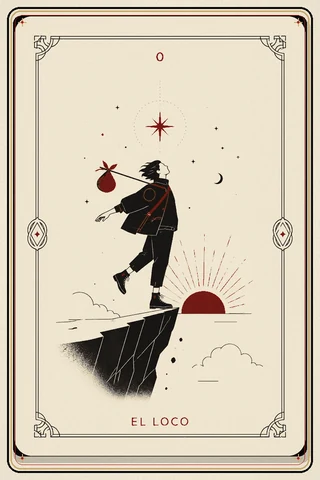
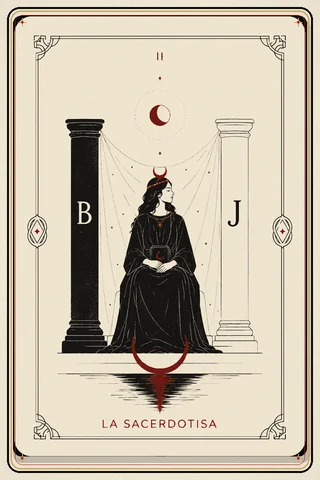
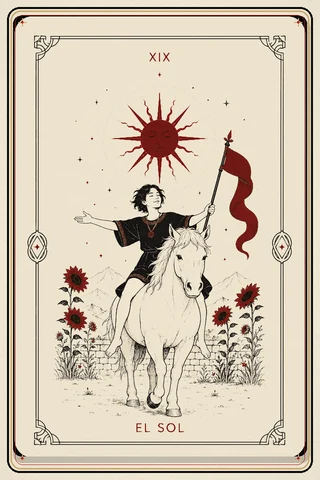
Yes
The card may support action while still showing conditions or cautions.
This free yes or no tarot is designed for closed questions. One card gives a symbolic lean toward yes, no or not yet, together with the context behind it.
There is no perfect question. Start with what you want to understand today.
Not sure what to ask? Try one:
Typing a question is optional. On the next screen, you will shuffle and choose your cards.
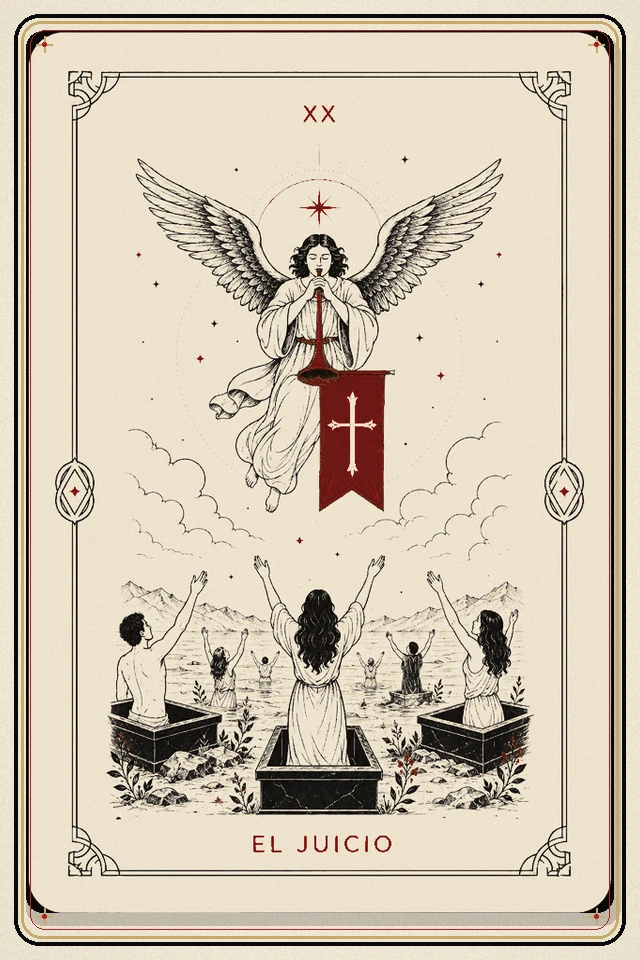
The reading is not built from one generic sentence. It combines your question, the cards you choose, each card position, orientation, and how the cards interact with one another.
This is a symbolic reading for personal reflection. It does not claim certainty about the future or another person’s private thoughts.
The card gives a directional answer and the condition around it; it is not a mathematical certainty.
This spread turns card orientation and symbolic weight into a short answer: yes, no, or not yet. The short answer never replaces the card interpretation.
“Not yet” does not automatically mean “never”. It may point to mixed conditions, missing information, or a question that is not ready to be reduced to binary.
A yes/no spread needs a genuinely closed question.
| Better | Too open |
|---|---|
| Should I accept this offer under the current conditions? | What will happen with my job? |
| Is this a good time to send the message? | What does this person feel for me? |
| Should I wait before deciding? | What will my future be like? |
The short answer and card meaning work together.
The card may support action while still showing conditions or cautions.
The reading may be highlighting a limit or unresolved condition.
It may suggest waiting, gathering information, or reframing the question.
“Why?” and “What do they feel?” need a different spread.
The reading can support reflection, not take responsibility for you.
That turns the reading into confirmation seeking.
If yes/no leaves you with the same uncertainty, you probably need context.
The direction comes from the card’s symbolic core and orientation. Movement and openness can lean yes; closure and blockage can lean no. When the condition is unresolved, “not yet” is more honest than forcing certainty.
The explanation matters more than the label, because a yes may still come with a condition.
Yes/no works best when the decision itself is clear.
| Works well | Use three cards instead |
|---|---|
| Should I send this proposal today? | Why is my career stuck? |
| Should I accept this invitation? | What does this person feel, want, and plan to do? |
| Is now a good time to start this conversation? | How do I fix this whole relationship? |
Ambiguity can point to a specific problem.
A relevant fact has not surfaced yet.
There may be intent without enough support.
Several decisions may be hiding inside one yes/no.
An explicit refusal, contract term, blocked channel, or deadline is concrete information. Use the card to reflect on your response to that reality, not to erase the fact.
Switch formats when binary is too narrow.
No. It is symbolic guidance, not verified prediction.
Yes, without treating the reading as access to private thoughts.
The tendency is unclear or depends on conditions that are still changing.
No. Repeating the same question without new context usually adds noise and confirmation bias. Draw again when new information appears or the question genuinely changes.
No. It can indicate blockage, excess, delay, or a more internal expression. Position and surrounding cards determine the nuance.